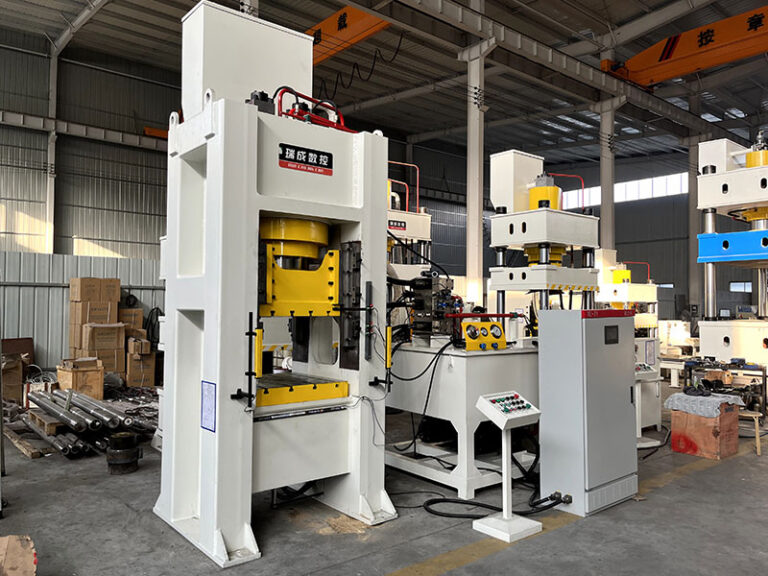

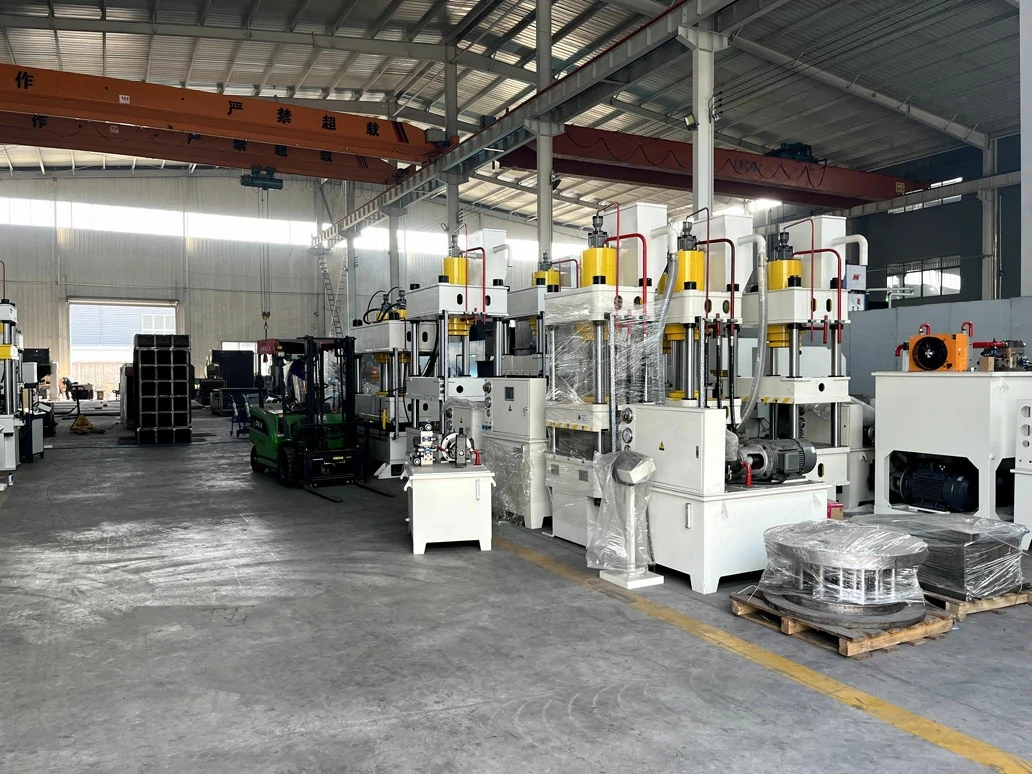
Discover why the 200 ton hydraulic press is the go-to choice for medium-to-heavy industrial forming, metal stamping, and precision manufacturing operations.
When your manufacturing demands exceed what smaller presses can handle, but you don’t need the massive footprint of a 500-ton machine, the 200 ton press hits the sweet spot. These machines deliver serious compressive force—exactly 400,000 pounds of pressing power—while remaining versatile enough for diverse applications from automotive parts forming to aerospace component manufacturing.
What sets the hydraulic press 200 ton apart from mechanical alternatives? It’s all about controlled, consistent pressure. Unlike mechanical presses that rely on flywheels and cranks, hydraulic systems use Pascal’s Law to generate smooth, adjustable force throughout the entire stroke. This means you get full tonnage at any point in the pressing cycle, not just at the bottom dead center.
Key Specifications of a 200 Ton Hydraulic Press
400,000 lbs
Customizable
Adjustable
Energy Efficient
These specifications make the 200 ton hydraulic press ideal for workshops and production lines that need serious forming capability without the space and energy requirements of larger systems. The working pressure typically ranges from 20-25 MPa, providing enough force for demanding industrial tasks while maintaining precise control.
Core Components That Make It Work
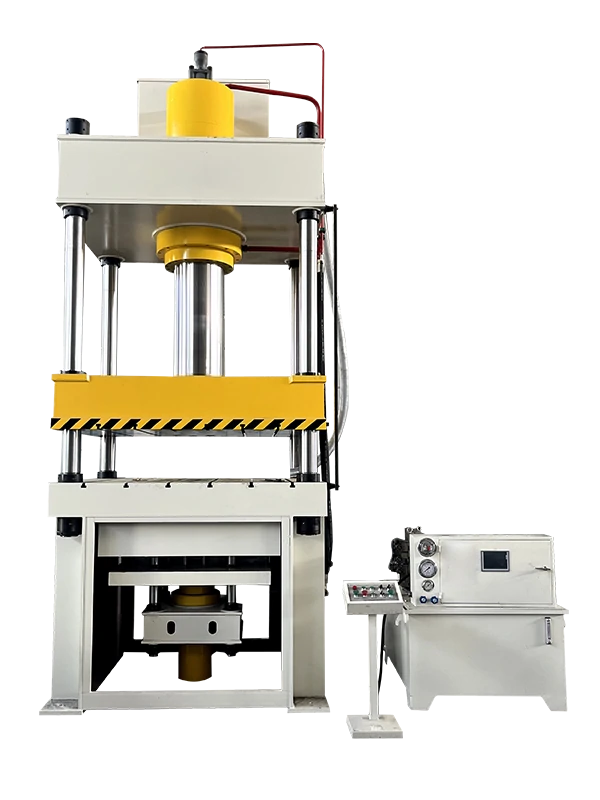
Understanding what’s inside your 200 ton press helps you operate it better and maintain it properly. Here are the critical components:
Hydraulic Cylinder System
The heart of the machine. High-grade steel cylinders house pistons that convert hydraulic pressure into linear motion. Quality seals prevent oil leakage and maintain consistent pressure.
Frame Structure
Most 200-ton models use four-post or H-frame designs. The frame must resist deflection under full load—look for stress-relieved steel construction for long-term accuracy.
Hydraulic Power Unit (HPU)
Includes the motor, pump, valves, and oil reservoir. A well-designed HPU ensures smooth operation and energy efficiency. Variable displacement pumps can reduce energy consumption by 30-40%.
Control System
Modern hydraulic press 200 ton machines feature PLC controls with touchscreen interfaces. You can program pressure curves, stroke positions, and dwell times for repeatable results.
Worktable (Bolster Plate)
This is where your workpiece sits. T-slots allow flexible tooling mounting. The table must be thick enough (usually 80-120mm) to resist bending under load.
Safety Systems
Light curtains, emergency stops, two-hand controls, and pressure relief valves protect operators. Never compromise on safety features.
Real-World Applications of 200 Ton Hydraulic Presses
Manufacturers across industries rely on the 200 ton hydraulic press for critical forming operations. Here’s where these machines prove their worth:
Automotive Manufacturing
Press-fitting bearings, forming brake pads, assembling chassis components, and stamping body panels. The consistent pressure ensures every part meets tight tolerances.
Metal Fabrication
Bending, punching, blanking, and deep drawing sheet metal. A 200-ton press can handle steel up to 20mm thick or aluminum up to 30mm with proper tooling.
Aerospace Components
Forming high-strength alloy parts for aircraft structures. The precise pressure control prevents material thinning and ensures structural integrity.
Plastic & Composite Molding
Thermoforming large plastic components, compression molding fiberglass parts, and producing carbon fiber components with uniform density.
Powder Metallurgy
Compacting metal powders into precise shapes for gears, bearings, and structural parts. The controlled pressure ensures consistent part density.
Construction Equipment
Forming I-beams, brackets, roof panels, and structural components. The 200-ton capacity handles heavy-gauge materials with ease.
How the 200 Ton Hydraulic Press Actually Works
The operation seems simple—oil pushes a piston, the piston presses your material—but there’s sophisticated engineering behind every stroke. Here’s the step-by-step process:
Step 1 – Pressure Generation: The hydraulic pump draws oil from the reservoir and forces it through high-pressure lines into the main cylinder. In a typical 200-ton system, this happens at 20-25 MPa (2900-3600 PSI).
Step 2 – Piston Movement: As pressurized oil fills the cylinder, it pushes against the piston surface area. Using Pascal’s Law (Force = Pressure × Area), the system generates the full 200 tons of force. The larger the piston diameter, the more force you get from the same pressure.
Step 3 – Material Forming: The ram descends and contacts your workpiece. Unlike mechanical presses that deliver impact force, the 200 ton hydraulic press applies steady, controlled pressure. You can hold this pressure (dwell time) to ensure complete material flow—critical for deep drawing operations.
Step 4 – Return Stroke: In single-acting presses, springs or gravity return the ram. Double-acting models use hydraulic pressure on the return side for faster, more controlled retraction. This is essential for high-volume production.
Comparing 200 Ton Press to Other Capacities
| Feature | 100 Ton Press | 200 Ton Press | 500 Ton Press |
|---|---|---|---|
| Force Output | 200,000 lbs | 400,000 lbs | 1,000,000 lbs |
| Floor Space | 2×3 meters | 3×4 meters | 5×6 meters |
| Power Consumption | 7.5-11 KW | 15-22 KW | 37-55 KW |
| Material Thickness | Up to 10mm steel | Up to 20mm steel | Up to 40mm steel |
| Best For | Light forming, small parts | General industrial use | Heavy forging, large parts |
| Investment Cost | $ | $$ | $$$ |
The hydraulic press 200 ton occupies a strategic middle ground. It’s powerful enough for serious industrial work but doesn’t require the massive infrastructure investment of 500-ton systems. For most medium-sized manufacturers, it offers the best balance of capability and cost-effectiveness.
Critical Safety & Operation Guidelines
Operating a 200-ton press demands respect for the enormous forces involved. Follow these essential practices:
- Check hydraulic oil levels daily and inspect all hoses for wear or leaks before each shift
- Never exceed the rated 200-ton capacity—overloading can cause catastrophic frame failure
- Always use proper personal protective equipment (PPE): safety glasses, steel-toed boots, and hearing protection
- Ensure workpieces are centered and properly supported to prevent off-center loading
- Install and maintain light curtains or physical guards to protect operators
- Schedule preventive maintenance every 500 operating hours: replace seals, check pressure settings, lubricate guide columns
- Train all operators on emergency stop procedures and never bypass safety interlocks
Is a 200 Ton Hydraulic Press Right for Your Operation?
Choosing the right press capacity is crucial for productivity and profitability. Here’s when a 200 ton hydraulic press makes sense:
✅ You’re forming medium-thickness materials: If you regularly work with 8-20mm steel or 15-30mm aluminum, the 200-ton capacity gives you enough force with room to spare.
✅ You need versatility: Unlike specialized presses, a 200-ton hydraulic press can handle bending, punching, deep drawing, straightening, and assembly—often on the same machine with quick tooling changes.
✅ Your production volume justifies it: If you’re running 2-3 shifts or need consistent output, the durability and speed of a 200-ton system pays for itself.
✅ You require precision: Modern 200 ton press models with PLC controls can hold tolerances of ±0.1mm, essential for automotive and aerospace work.
✅ Budget matters: You get industrial-grade capability without the premium price of 500-ton systems. The ROI typically falls between 18-36 months for most applications.
However, if you’re only forming thin sheet metal (under 5mm) or doing light assembly work, a 100-ton press might be more economical. Conversely, if you’re forging large structural components or working with materials over 25mm thick, consider stepping up to 315 or 500 tons.
Ready to Upgrade Your Production Capability?
Our engineering team specializes in matching manufacturers with the perfect 200 ton hydraulic press configuration. From custom table sizes to automated feeding systems, we build solutions that fit your exact needs.
Request a Free QuoteFrequently Asked Questions
Q: What’s the difference between a 200 ton hydraulic press and a 200 ton mechanical press?
A: The key difference is how force is applied. A 200 ton hydraulic press delivers full tonnage throughout the entire stroke with adjustable pressure and speed. Mechanical presses use flywheels and cranks, delivering maximum force only at bottom dead center with fixed stroke length. Hydraulic presses offer better control for deep drawing and forming complex shapes, while mechanical presses are faster for simple stamping operations.
Q: How much does a 200 ton hydraulic press cost?
A: Prices vary based on features and configuration. A basic manual 200-ton press starts around $25,000-$35,000. PLC-controlled models with advanced features range from $45,000-$75,000. Custom configurations with automation can exceed $100,000. Consider total cost of ownership: energy efficiency, maintenance requirements, and expected lifespan (typically 20-30 years with proper care).
Q: What maintenance does a 200 ton press require?
A: Regular maintenance is critical for safety and longevity. Daily: check oil levels and look for leaks. Weekly: inspect hoses, fittings, and safety devices. Monthly: test pressure settings and lubricate guide columns. Every 500 hours: replace hydraulic filters and check seal condition. Annually: have a certified technician perform comprehensive inspection. Proper maintenance prevents 90% of unexpected downtime.
Q: Can I use a 200 ton hydraulic press for deep drawing?
A: Absolutely! The hydraulic press 200 ton is excellent for deep drawing applications, especially with a double-acting configuration. The key is using a blank holder (provided by the lower cylinder in double-acting models) to control material flow and prevent wrinkling. You can achieve depth-to-diameter ratios of 2:1 or higher with proper tooling and lubrication.
Q: How much floor space and power do I need?
A: Plan for approximately 3×4 meters (10×13 feet) of floor space, plus additional room for material handling and operator access. Ceiling height should be at least 3.5 meters. Electrical requirements typically include 380V/3-phase/50Hz or 460V/3-phase/60Hz with 40-60 amp service. Some models offer 220V options for smaller facilities. Always verify specific requirements with the manufacturer.
Q: What’s the typical lead time for delivery and installation?
A: Standard models ship within 4-8 weeks from order confirmation. Custom configurations may take 10-12 weeks. Installation and commissioning typically require 3-5 days, including operator training. Factor in additional time for foundation preparation (if required) and electrical hookup. Many manufacturers offer turnkey installation services to get you production-ready faster.
Final Thoughts on 200 Ton Hydraulic Presses
The 200 ton hydraulic press represents a strategic investment for manufacturers who need serious forming capability without over-investing in oversized equipment. Whether you’re stamping automotive components, forming aerospace parts, or compacting powder metals, these machines deliver the power, precision, and versatility that modern production demands.
Success with your 200 ton press comes down to three factors: choosing the right configuration for your applications, investing in quality tooling, and maintaining the machine properly. When these elements align, you’ll enjoy years of reliable service and strong return on investment.
Remember, the cheapest press isn’t always the best value. Look for reputable manufacturers who stand behind their equipment with solid warranties, readily available spare parts, and responsive technical support. Your hydraulic press 200 ton is a long-term asset—treat it that way.
Ready to take the next step? Contact our team to discuss your specific requirements and get a customized solution that fits your budget and production goals.