

Hydraulic Press for Aerospace & Defense Manufacturing
When selecting a hydraulic press for aerospace and defense manufacturing, engineers must navigate the most unforgiving standards in the world, where zero-defect tolerance and extreme material performance are mandatory. As a foundational aerospace hydraulic press, this equipment is essential for forming advanced titanium alloys, shaping complex aerodynamic fuselage skins, and forging critical landing gear components. Beyond raw tonnage, a specialized superplastic forming press demands exceptional platen parallelism, precise thermal management, and strict contamination control to ensure the structural integrity of every flight-critical part.
Superplastic forming (SPF) and hot forming of titanium alloys
Superplastic Forming (SPF) and hot forming are critical processes for shaping high-strength titanium and nickel-based superalloys used in jet engine casings and airframe structures. These processes require heating the metal to extreme temperatures (often exceeding 900°C / 1650°F) where the material exhibits elongation rates of several hundred percent without necking.
The primary engineering challenge in SPF is managing thermal expansion. As the massive steel molds and press platens heat up, they expand unevenly, creating severe off-center loads that can tilt the ram and ruin part tolerances.
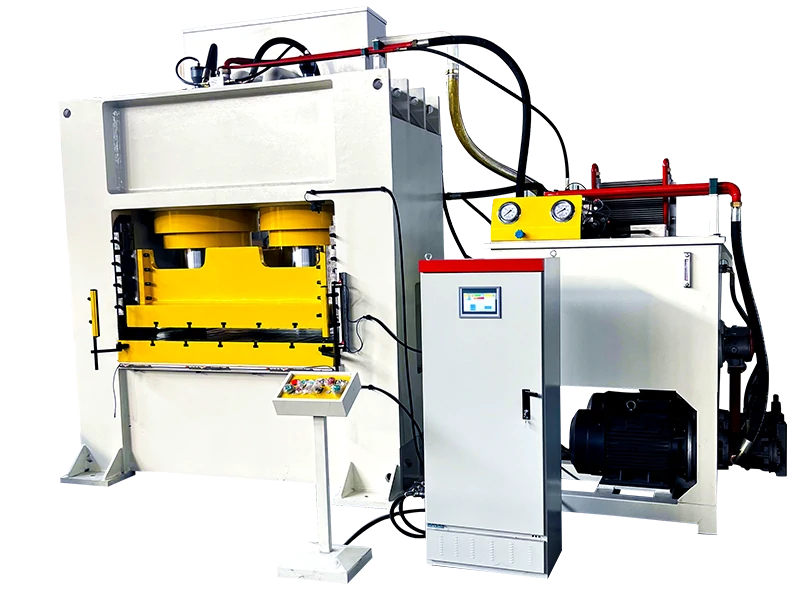
Fluid cell and sheet hydroforming for aerodynamic skins
Manufacturing complex, double-curved aerodynamic surfaces—such as fuselage panels, wing skins, and fairings—often utilizes fluid cell or sheet hydroforming. Instead of a solid male die, these processes use a high-pressure hydraulic fluid bladder or chamber to push the sheet metal into a single, relatively inexpensive mold cavity.
This technique eliminates die marks, reduces springback, and allows for the formation of large, seamless aerospace structures that would be impossible or prohibitively expensive to form with traditional matched-metal dies.
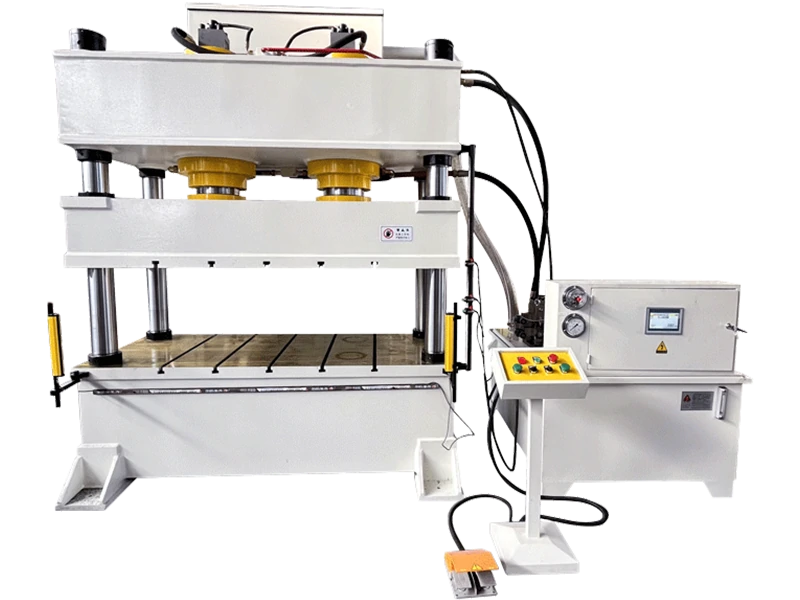
Rubber pad forming and stretch forming of thin-gauge alloys
For low-to-medium volume production of thin-gauge aluminum and titanium sheets, the Guerin process (rubber pad forming) remains a staple in aerospace manufacturing. A thick polyurethane pad acts as the universal female die, pressing the sheet metal around a simple, lightweight male form block.
This method protects the delicate aerospace alloys from surface scratching and minimizes tooling costs. It is frequently combined with stretch forming techniques to further reduce springback in complex contoured parts.
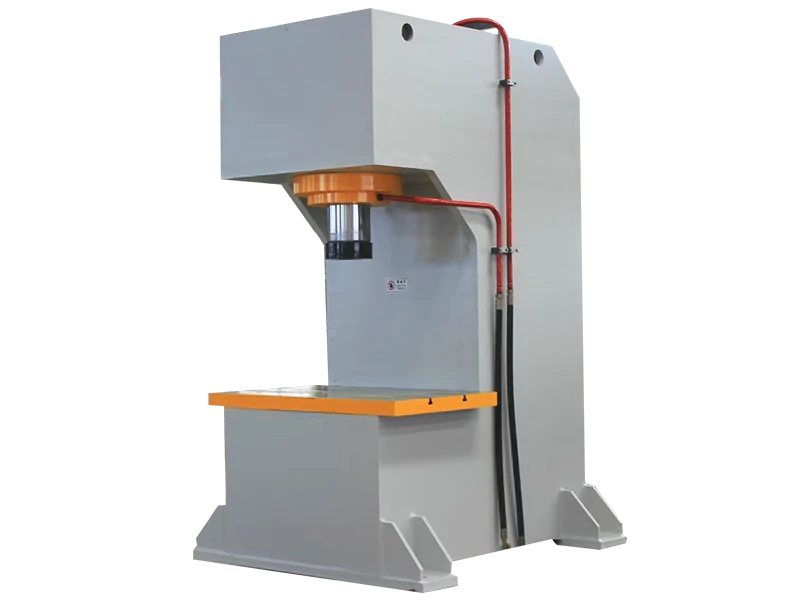
Heavy-duty forging for landing gear and propulsion systems
The most critical, high-stress components of an aircraft—such as landing gear struts, engine turbine disks, and structural bulkheads—require massive open-die or closed-die forging to align the metal grain flow and maximize fatigue life.
Forging aerospace-grade Inconel, titanium, and high-strength steels demands immense, continuous tonnage to penetrate the material core and eliminate internal voids, operating under extreme thermal and mechanical shock.
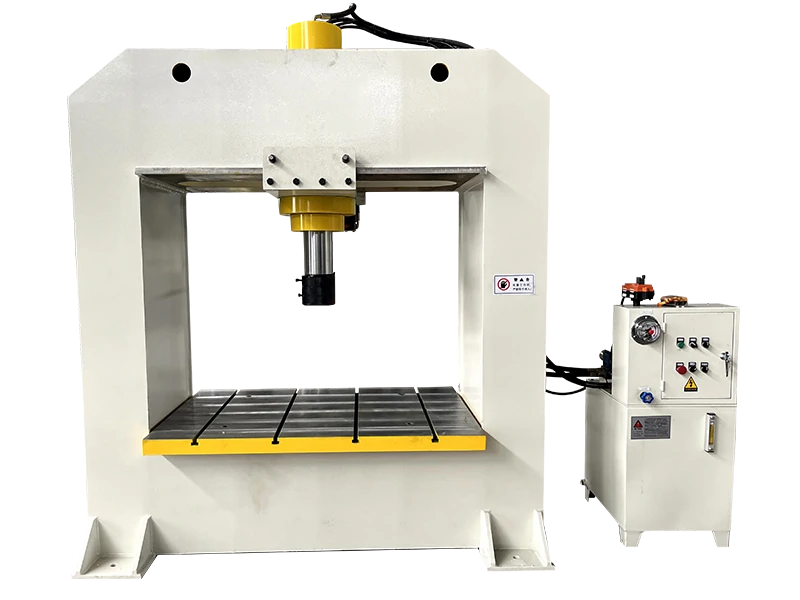
Precision control, traceability, and contamination prevention
In aerospace manufacturing, a hydraulic press is not just a forming tool; it is a highly monitored data node. Advanced servo-hydraulic systems provide closed-loop control over ram position, speed, and tonnage, ensuring that every stroke is identical. Furthermore, the integration of data acquisition systems allows for 100% traceability of process parameters for every single part produced, a strict requirement for aviation quality standards.
Equally critical is contamination prevention. Hydraulic fluid leaks can severely compromise the integrity of aerospace components, particularly those destined for fuel systems or oxygen environments.
Explore official guidelines on aerospace manufacturing quality standards, material specifications, and defense production requirements at Aerospace Industries Association (AIA) .
Frequently Asked Questions
Technical insights into aerospace hydraulic press applications, superplastic forming, fluid cell hydroforming, and stringent aviation manufacturing standards.
In SPF, titanium or superalloys are formed at extreme temperatures (often over 900°C). At these temperatures, the massive steel molds and press platens expand. If the press frame lacks rigidity, this thermal expansion causes off-center loading, leading to angular deflection (ram tilt). Even a microscopic deviation in parallelism will result in uneven part wall thickness, which is strictly unacceptable for flight-critical aerospace components.
Sheet hydroforming uses high-pressure hydraulic fluid to push the metal sheet into a single-sided mold, rather than using expensive matched-metal dies. This process eliminates die marks, reduces springback, and allows for the creation of large, complex double-curved aerodynamic surfaces (like fuselage skins) with excellent surface finish and minimal tooling costs, which is ideal for the low-to-medium production volumes typical in aerospace.
Rubber pad forming (often called the Guerin process) uses a thick polyurethane pad as a universal female die to press sheet metal around a simple, lightweight male form block. It is widely used in aerospace because it prevents surface scratching on delicate aluminum and titanium alloys, allows for rapid prototyping, and significantly reduces the cost and lead time of hard tooling for low-volume production runs.
Hydraulic fluid leaks can severely contaminate aerospace components, particularly those used in fuel, oxygen, or sensitive avionics systems. Presses designed for aerospace applications feature zero-leakage seal technologies, specialized drip containment systems, and sometimes even fluid-free servo-electric or linear servo drives to completely eliminate the risk of hydraulic oil contaminating the clean-room or production environment.
Aviation regulations require that every flight-critical component can be traced back to its exact manufacturing conditions. Modern hydraulic presses are equipped with advanced data acquisition systems and PLC interfaces that record and store process parameters (tonnage, ram position, speed, temperature, and dwell time) for every single cycle. This data is exported to factory MES systems to ensure 100% traceability and compliance with stringent aerospace quality standards like AS9100.
Aircraft landing gear components are forged from ultra-high-strength steels or titanium alloys and require massive tonnage to refine the internal grain structure and eliminate voids. These operations typically require heavy-duty open-die or closed-die forging presses with extremely wide daylight and high structural rigidity to handle the severe shock loads and large physical dimensions of the landing gear blanks. Gantry or heavy four-column hydraulic presses are commonly utilized for these applications.