

Hydraulic Press for Energy & Renewable Manufacturing
When selecting a hydraulic press for energy manufacturing, engineers must navigate the demanding requirements of electrical power generation and transmission infrastructure. A specialized renewable energy press serves as a critical forming and assembly solution, from stamping ultra-thin hydrogen fuel cell bipolar plates to laminating transformer cores. Each application demands specific press characteristics—whether it’s micron-level parallelism for delicate foil stamping or precise temperature control—making the right electrical power press essential to ensure the structural integrity and electrical performance of power system components.
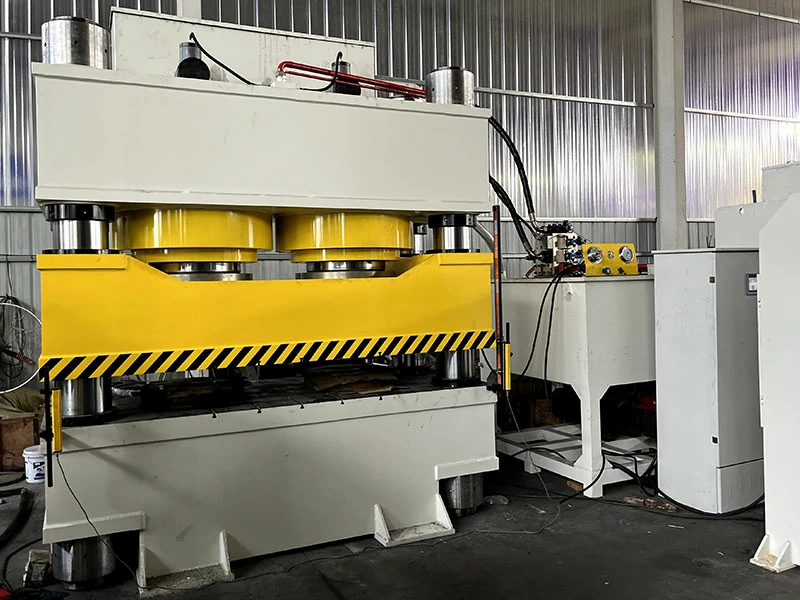
Precision stamping of hydrogen fuel cell bipolar plates
The core component of a hydrogen fuel cell is the bipolar plate, typically stamped from ultra-thin stainless steel or titanium foil ranging from 0.05mm to 0.1mm in thickness. After forming, these plates require precise conductive and anti-corrosion coatings to ensure efficient electron flow and chemical resistance. The stamping process must be absolutely flawless; any micro-cracks, surface scratches, or uneven material thinning will compromise the protective coating and lead to premature cell failure.
Achieving defect-free bipolar plates requires a press with exceptional platen parallelism and a highly controlled, shock-free closing profile to protect both the delicate foil material and the expensive multi-level progressive dies.
Precision lamination pressing for transformer cores
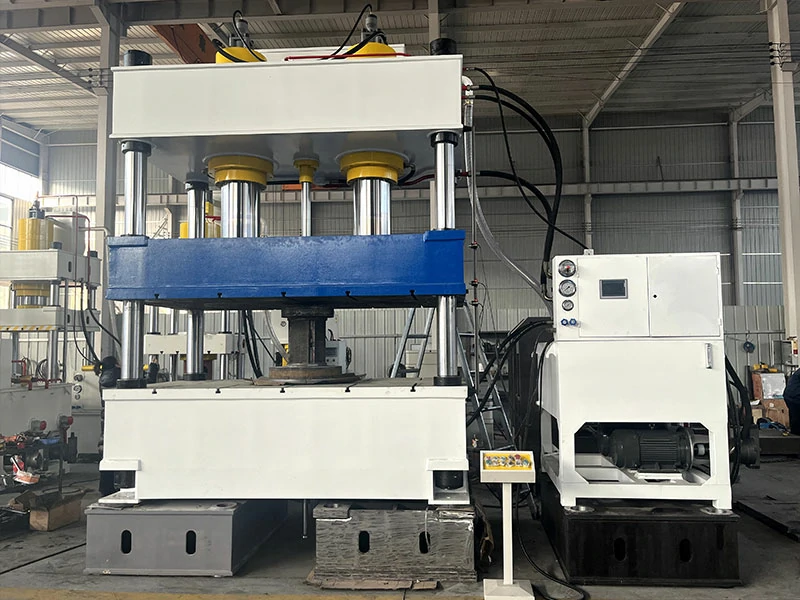
Power transformers are constructed from hundreds of thin silicon steel laminations stacked together to form the magnetic core. These laminations must be precisely aligned and tightly compressed to minimize eddy current losses and ensure efficient magnetic flux transfer.
The lamination pressing process requires extremely accurate positional control to prevent misalignment between layers, as even minor deviations can create air gaps that reduce transformer efficiency and generate excessive heat during operation. The press must also maintain consistent pressure throughout the stacking process to achieve the required core density.
Thermal lamination of solar photovoltaic panels
Solar panel manufacturing involves laminating multiple layers—photovoltaic cells, encapsulant films (EVA or PVB), tempered glass, and backsheet materials—into a single, weather-resistant module. This process requires precise temperature control (typically 130°C to 150°C) and uniform pressure distribution across the entire panel surface to ensure proper bonding without creating air bubbles or delamination.
The heated platens must maintain temperature uniformity within ±2°C across the entire work area, as hot spots can damage the photovoltaic cells while cold spots result in incomplete curing and poor adhesion.
Compression molding of high-voltage electrical insulators
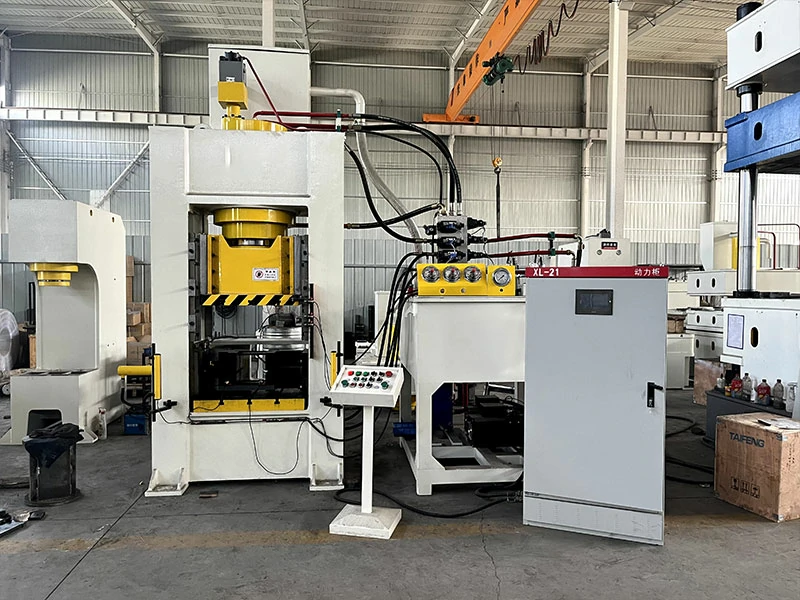
High-voltage electrical insulators used in power transmission lines and substations are manufactured through compression molding of BMC (Bulk Molding Compound) or specialized ceramic-polymer composites. These insulators must exhibit exceptional electrical insulation properties, resistance to tracking and erosion, and long-term durability under extreme weather conditions including UV exposure, temperature cycling, and pollution.
The molding process requires precise control of material flow, curing temperature, and compression pressure to eliminate internal voids and ensure uniform density throughout the insulator body. Complex geometries with deep ribs and shed profiles demand multi-stage closing speeds and exhaust cycles to prevent material trapping.
Precision swaging of power cable terminals and connectors
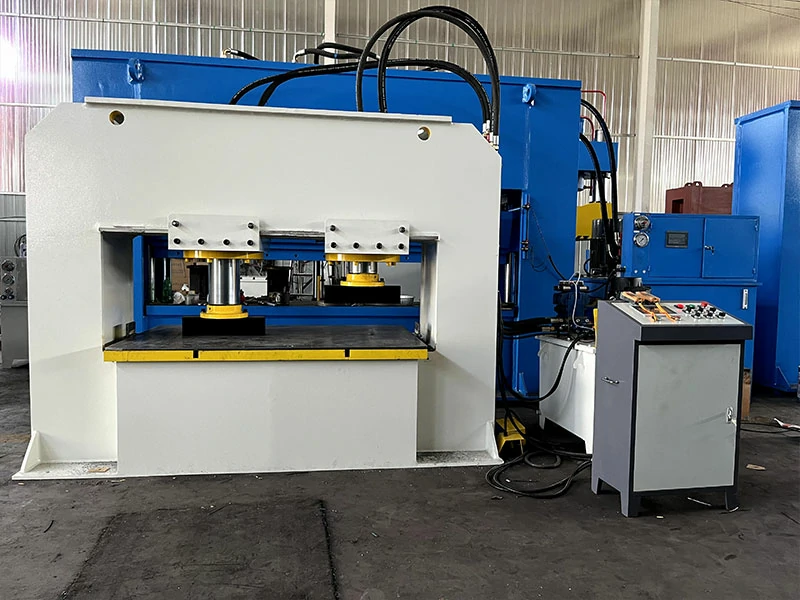
Electrical power distribution systems require reliable connections between cables and equipment. Copper and aluminum terminals, lugs, and connectors are attached to power cables through precision swaging (crimping) operations that create cold-welded, gas-tight joints.
The swaging process must apply exact force to deform the terminal around the cable strands without damaging the conductor or creating insufficient contact pressure. Over-crimping can cut into the wire strands, increasing electrical resistance, while under-crimping results in loose connections that generate heat and pose fire hazards.
Explore research, development guidelines, and manufacturing standards for renewable energy technologies at National Renewable Energy Laboratory (NREL) .
Frequently Asked Questions
Technical insights into hydraulic press applications for electrical power generation, hydrogen fuel cell manufacturing, transformer production, and renewable energy component forming.
Hydrogen fuel cell bipolar plates are stamped from ultra-thin metal foil (typically 0.05mm to 0.1mm thick) and then coated with conductive and anti-corrosive layers such as gold, platinum, or carbon-based coatings. Any surface defect—including micro-cracks, scratches, or uneven material thinning—will breach this protective coating, exposing the base metal to the corrosive fuel cell environment. This leads to increased contact resistance, reduced efficiency, and premature cell failure. Therefore, the stamping press must provide absolutely parallel platens and shock-free pressure application to protect both the foil surface and the precision die geometry.
Transformer cores are constructed from hundreds of thin silicon steel laminations stacked together to form the magnetic circuit. If the laminations are not precisely aligned and tightly compressed during assembly, air gaps form between layers. These air gaps increase the magnetic reluctance of the core, causing higher eddy current losses and reduced magnetic flux transfer efficiency. The result is a transformer that generates more waste heat, consumes more energy, and has a shorter operational lifespan. Precision lamination pressing ensures optimal core density and alignment, directly improving transformer efficiency and reducing no-load losses.
Delamination in solar panels occurs when the bond between the photovoltaic cells, encapsulant (EVA or PVB), glass, and backsheet fails, allowing moisture and air to penetrate the module. This is typically caused by incomplete curing of the encapsulant due to uneven temperature distribution or insufficient pressure during the lamination process. Hydraulic presses designed for solar panel lamination feature heated platens with precise temperature control (maintaining uniformity within ±2°C across the entire surface) and programmable pressure profiles that ensure consistent bonding pressure throughout the curing cycle. This eliminates air pockets and ensures complete encapsulant flow around the cells, resulting in long-term weather resistance and module reliability.
High-voltage insulators made from BMC (Bulk Molding Compound) often feature complex geometries with deep ribs, multiple sheds, and thin walls. When the mold closes too quickly, the viscous BMC material can trap air pockets or flow unevenly, creating internal voids and weak spots that compromise electrical insulation properties. Multi-stage closing speed control allows the press to approach the mold rapidly, then slow down significantly as the material begins to contact the mold surfaces, allowing the BMC to flow smoothly and fill all cavities without trapping gases. Some presses also incorporate “breathing” or exhaust cycles—slightly opening the mold to release trapped volatiles before applying full curing pressure—further reducing porosity and ensuring uniform density throughout the insulator.
Cable terminal swaging creates a cold-welded, gas-tight joint between the terminal and the cable conductor through controlled plastic deformation. If the terminal is over-crimped (excessive force), the terminal metal can cut into the wire strands, reducing the effective cross-sectional area of the conductor. This increases electrical resistance, generates heat during operation, and can lead to conductor failure. If the terminal is under-crimped (insufficient force), the joint remains loose, creating high contact resistance. This also generates excessive heat, poses a fire hazard, and can cause the terminal to pull off under mechanical load. Precision hydraulic presses with force monitoring ensure that every swaging operation applies the exact force required to create a reliable, low-resistance electrical connection without damaging the conductor.
Yes, modern hydraulic presses are designed for seamless integration into automated production lines. They can be equipped with proportional valves, displacement sensors, and PLC interfaces that allow communication with robotic arms, automated shuttle tables, conveyor systems, and in-die sensing equipment. For high-volume electrical component production—such as cable terminal swaging, transformer lamination stacking, or solar panel lamination—this automation integration ensures repeatable quality, enables 100% process data traceability, and significantly increases production throughput while reducing manual labor requirements.