

Hydraulic Press Automotive Applications
The automotive supply chain relies on precise, stable, and highly adaptable forming technologies to meet strict safety and performance standards. Hydraulic presses play an indispensable role in manufacturing a vast array of vehicle components, ranging from deep-drawn sheet metal chassis parts and forged powertrain gears to composite interior panels and EV battery enclosures. Understanding the specific process requirements—such as constant tonnage, adjustable stroke, and precise speed control—is critical for selecting the right press architecture to optimize production efficiency and minimize scrap rates.
Sheet metal stamping and deep drawing for auto components
Manufacturing automotive body panels, chassis brackets, and structural beams requires deep drawing processes that maintain constant tonnage throughout the entire stroke. Unlike mechanical presses that deliver a fixed impact, hydraulic systems provide precise blank holder force control, preventing material tearing and wrinkling while ensuring smooth surface finishes on complex sheet metal parts.
The ability to adjust stroke length, pressing speed, and dwell time allows engineers to optimize the forming process for various grades of advanced high-strength steel (AHSS) and aluminum alloys.
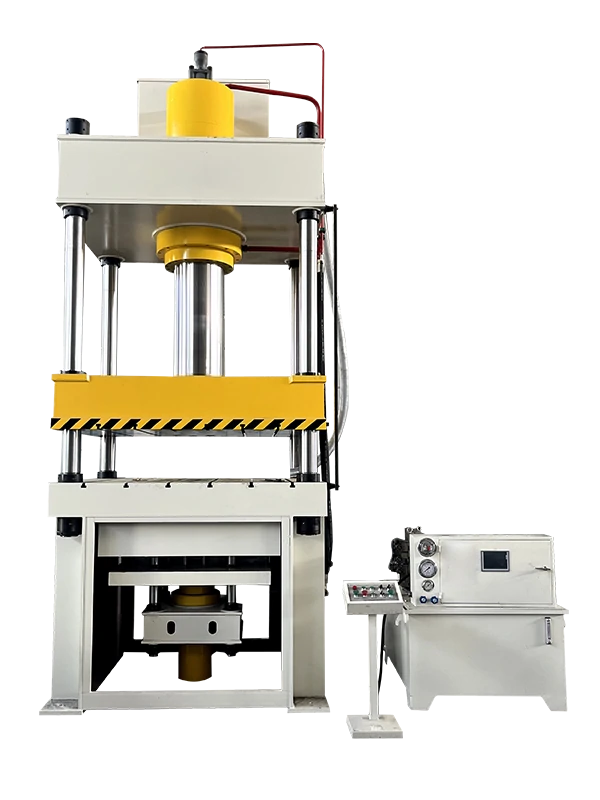
Compression molding for rubber, SMC, and brake components
Automotive sealing components, vibration control mounts, brake pads, and SMC/BMC interior parts rely heavily on compression molding. These processes require heated platens with uniform temperature distribution, as well as multi-stage speed control and programmable exhaust cycles to ensure material flows properly without air entrapment.
As the automotive industry accelerates its shift towards lightweighting, the use of composite materials is growing rapidly. According to the American Composites Manufacturers Association (ACMA), advanced composite molding is critical for reducing vehicle weight while maintaining structural safety and lowering emissions.
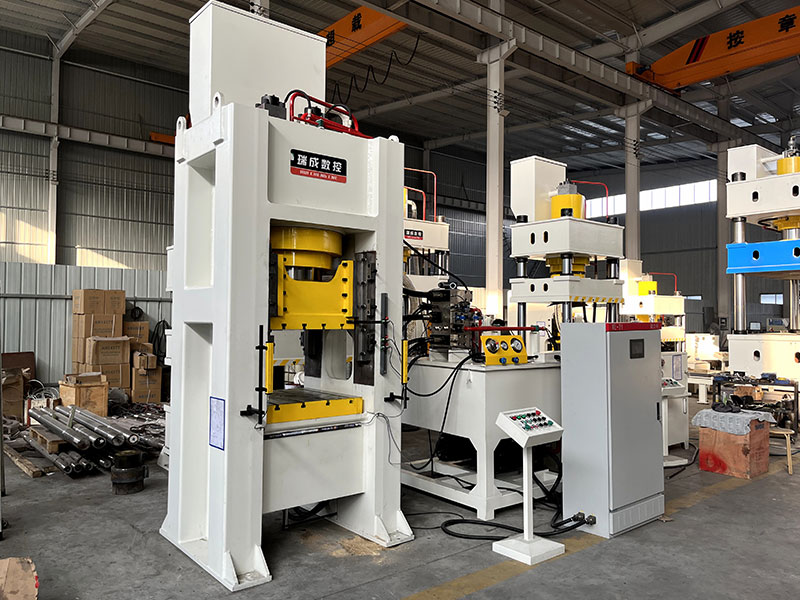
Precision pressing for EV battery and motor assemblies
The rapid expansion of the electric vehicle (EV) market has introduced stringent demands for precision pressing. Hydraulic presses are extensively utilized for forming EV battery tray enclosures, stacking motor laminations, and pressing busbars. These components require tight tolerances, clean operation, and highly accurate force control to ensure electrical safety and energy efficiency.
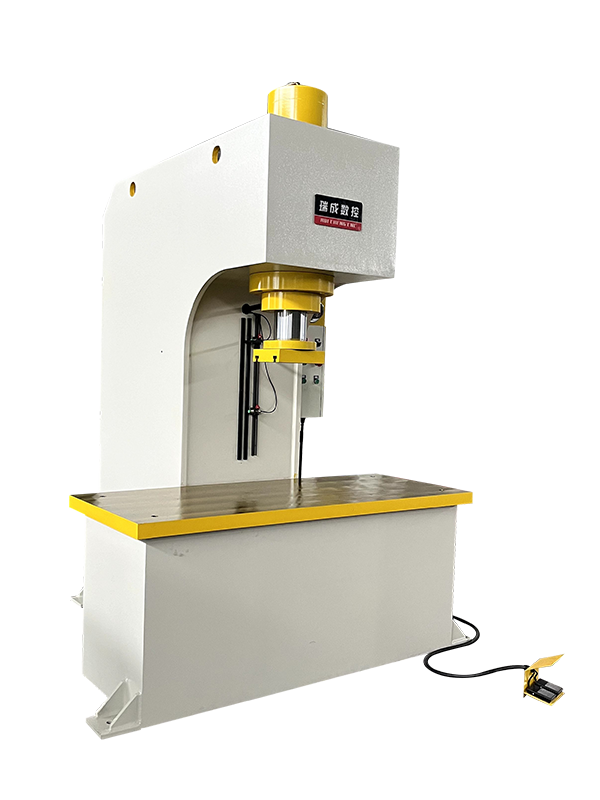
For high-precision assembly, motor lamination stacking, and small-scale component forming, operators and automated arms require unobstructed access to the work area for quick tooling changes and material feeding.
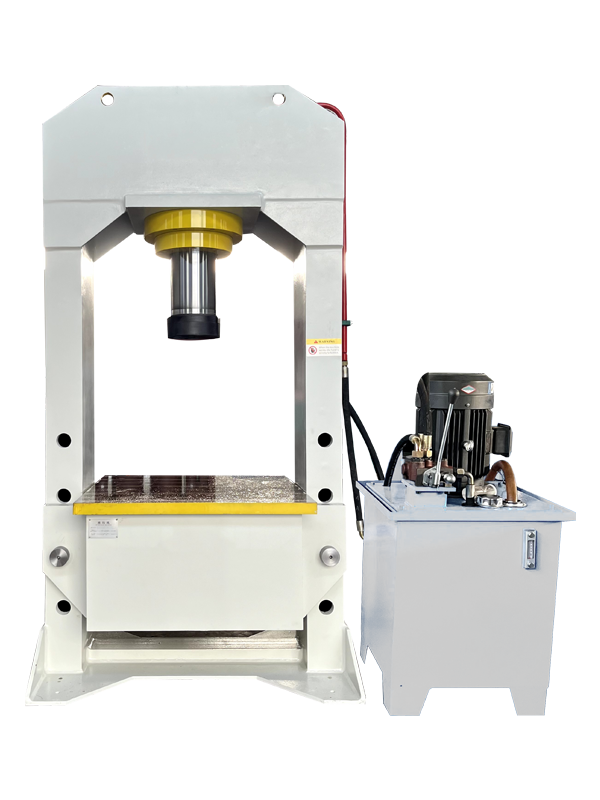
Heavy-duty forming and forging for powertrain parts
Critical powertrain and heavy chassis parts, including gears, shafts, and suspension components, require high-tonnage forming to achieve superior structural integrity. Hydraulic forging presses deliver continuous, controllable force, which is essential for penetrating the material core and refining the grain structure under extreme heat.
Unlike impact-based mechanical presses, hydraulic systems allow for adjustable dwell time, ensuring complete deformation of high-strength automotive alloys while protecting expensive forging dies from severe shock loads.
Automation integration and servo-hydraulic trends
Modern automotive manufacturing is rapidly transitioning towards fully automated, high-speed production cells. Hydraulic presses are increasingly integrated with robotic arms, automated shuttle tables, and in-die sensors to create seamless manufacturing loops. Proportional valves and advanced PLC interfaces allow the press to communicate seamlessly with the factory’s central control system.
Furthermore, the adoption of servo-hydraulic technology is transforming the industry. According to the U.S. Department of Energy’s Advanced Manufacturing Office, upgrading to servo-driven hydraulic systems can reduce energy consumption in pressing operations by up to 50% while significantly improving cycle repeatability and reducing noise levels.
Learn more about global automotive manufacturing quality standards and supply chain requirements at Automotive Industry Action Group (AIAG) .
Frequently Asked Questions
Technical insights into hydraulic press applications in the automotive industry, metal stamping, composite molding, EV battery manufacturing, and production automation.
Deep drawing requires constant tonnage throughout the entire stroke and precise blank holder force to prevent sheet metal tearing or wrinkling. Hydraulic presses provide full tonnage at any point in the stroke and allow for adjustable pressing speeds, making them highly effective for complex, large-scale auto body panels and chassis brackets where mechanical presses might cause shock loading or material failure.
SMC and BMC compression molding requires releasing trapped gases to prevent blisters and structural weaknesses. Hydraulic presses achieve this through programmable logic that performs multiple “breathing” or exhaust cycles—slightly opening the mold under low pressure to let gases escape before applying full tonnage for the final cure. This precise speed and pressure control is difficult to achieve with standard mechanical presses.
A hydraulic cushion (or die cushion) is installed beneath the press bed or in the slide to provide a controlled upward force. In deep drawing operations, it acts as a blank holder, gripping the edges of the sheet metal and controlling the material flow into the die cavity. This prevents wrinkling and ensures a smooth, defect-free surface finish on complex automotive body panels.
Servo-hydraulic technology replaces traditional constant-speed induction motors with servo motors that drive the hydraulic pump only when movement is required. This eliminates energy waste during idle or dwell times, reducing overall energy consumption by up to 50%. It also significantly lowers noise levels, reduces hydraulic oil temperature (minimizing cooling needs), and improves the speed and repeatability of the pressing cycle.
EV battery trays are typically large, deep-drawn components made from aluminum alloys or high-strength steel. The primary challenge is maintaining uniform material thickness and preventing springback or wrinkling across a massive surface area. This requires a press with exceptional platen parallelism, high tonnage, and often a multi-point hydraulic cushion system to manage material flow evenly across the entire die.
Modern hydraulic presses act as the central hub of automated cells. They are equipped with proportional valves and PLC interfaces to communicate with robotic arms for part loading/unloading. Safety light curtains, interlocking guards, and displacement sensors ensure safe operation. Additionally, hydraulic systems can be fitted with shuttle tables or rotary indexing tables to allow continuous, uninterrupted production cycles.