

Hydraulic Press for Medical Device Manufacturing
When selecting a hydraulic press for medical device manufacturing, engineers must navigate the most stringent quality and regulatory standards in the industry. A specialized medical device press plays an indispensable role not just for forming, but for critical precision assembly, swaging, and the production of sterile packaging. Beyond raw force, a modern medical manufacturing press demands exceptional process control, 100% part traceability through force-distance monitoring, and cleanroom-compatible designs to ensure the absolute safety of life-saving devices.
Precision assembly and swaging of micro medical components
The assembly of intricate medical devices—such as catheters, syringes, pacemaker wire leads, and surgical instruments—requires highly controlled, low-tonnage pressing. Processes like swaging, pin insertion, and staking must apply exact force to join delicate components without cracking brittle plastics or damaging sensitive internal electronics.
In these applications, operators require unobstructed access to the work area for precise manual placement of micro-components, often within highly controlled environments.
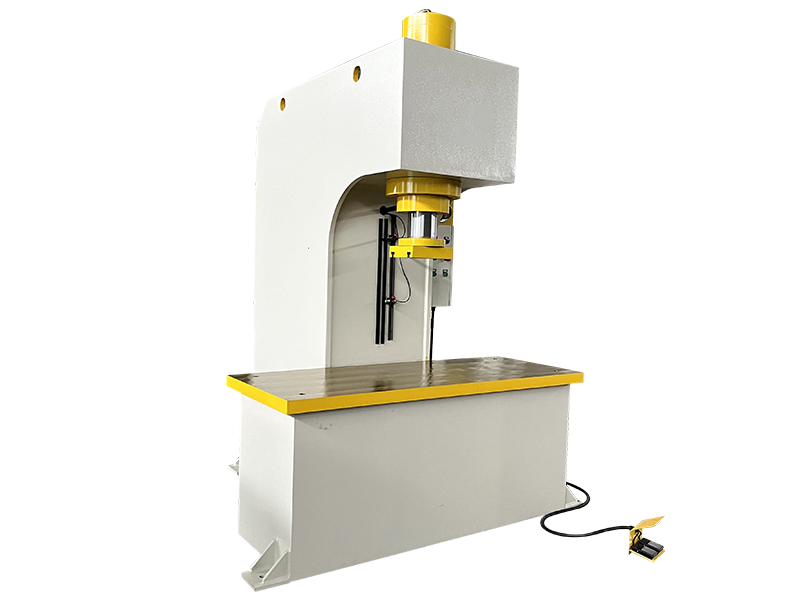
Force-distance monitoring and process signature analysis
In medical manufacturing, simply applying force is not enough; the exact force profile must be recorded and verified for every single cycle. Advanced hydraulic presses are integrated with high-precision load cells and linear transducers to generate a “force-distance” curve (signature analysis) for each part. By establishing a strict upper and lower tolerance window, the press can instantly flag a “PASS” or “FAIL” result, ensuring that every assembled implant or device meets exact specifications.
This real-time data acquisition is a fundamental requirement for compliance with FDA regulations and ISO 13485 quality management standards, providing 100% traceability.
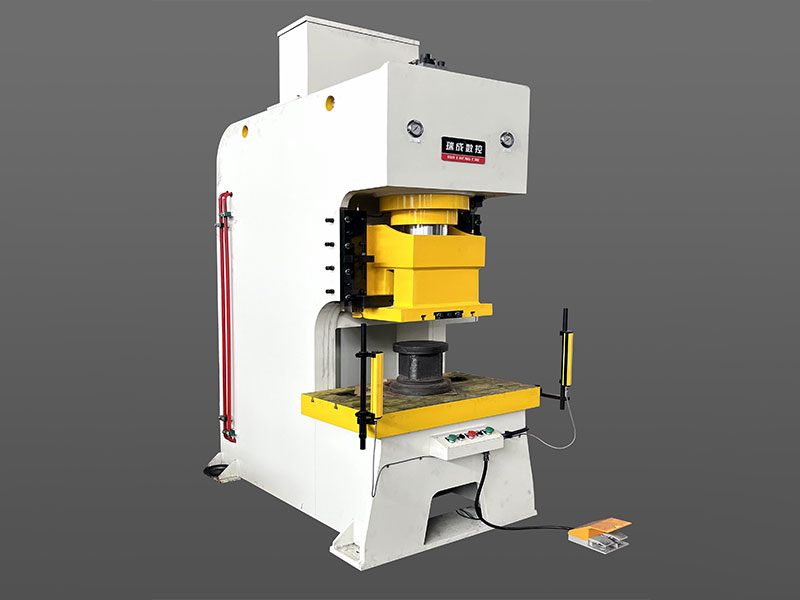
Deep drawing for sterilization containers and diagnostic housings
The medical field requires vast quantities of sterile packaging, surgical instrument trays, and large diagnostic equipment enclosures. These components are often produced through deep drawing or thermoforming of medical-grade stainless steel, aluminum, or specialized polymers. The process demands uniform pressure distribution across the entire sheet to prevent thinning, wrinkling, or surface defects that could harbor bacteria.
Maintaining a flawless surface finish during forming is critical, as these components will later undergo rigorous anodizing, passivation, or mirror polishing processes.
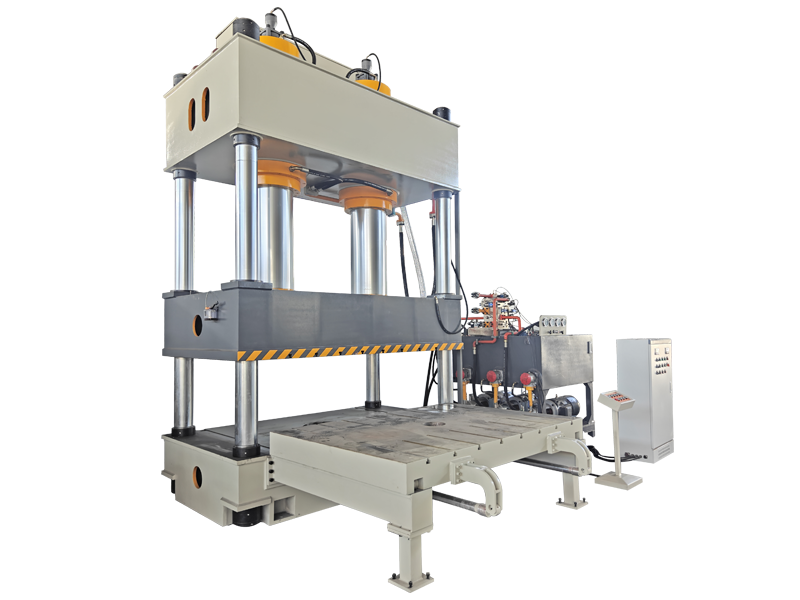
Precision pressing for orthopedic implants and surgical tools
The assembly of orthopedic implants, such as joint replacements, bone plates, and surgical cutting guides, often involves press-fitting titanium or cobalt-chromium components into ultra-tight tolerances. Any angular deviation during the pressing process can compromise the biomechanical integrity of the implant or cause premature wear in the human body.
Furthermore, these components are frequently asymmetrical or feature deep cores, creating severe off-center loads that can tilt the ram of a standard press, leading to catastrophic assembly failures.
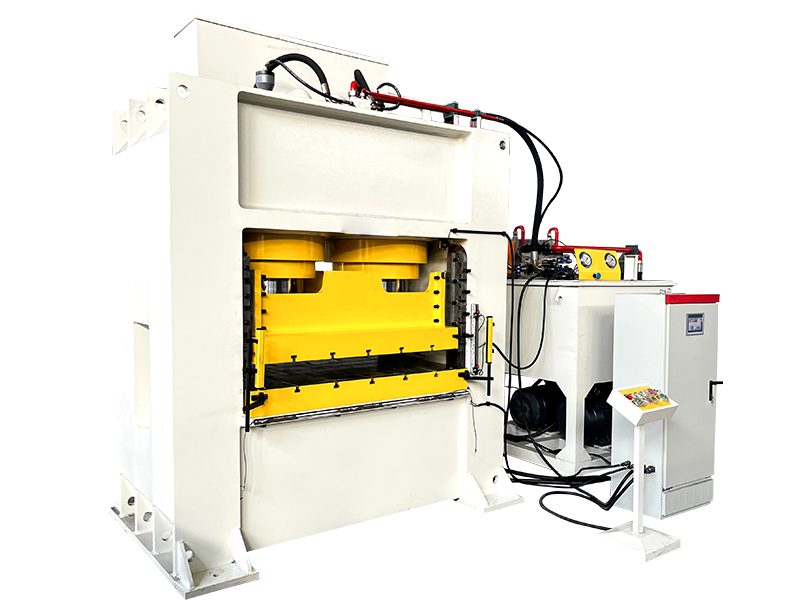
Cleanroom compatibility and large medical equipment forming
Medical presses must often operate in ISO-classified cleanrooms, requiring specialized designs to prevent particulate or fluid contamination. This includes the use of stainless steel surfaces, food-grade or cleanroom-compatible hydraulic fluids, and advanced drip containment systems to ensure zero leakage onto sensitive medical products.
Beyond micro-components, the medical industry also requires the forming of large structural parts for MRI/CT imaging equipment, hospital beds, and advanced rehabilitation exoskeletons, which demand significant vertical clearance and specialized thermal or composite pressing capabilities.
Explore official guidelines on medical device manufacturing quality standards, regulatory compliance, and production traceability at U.S. Food and Drug Administration (FDA) – Medical Devices .
Frequently Asked Questions
Technical insights into hydraulic press applications in the medical device industry, precision assembly, process traceability, and cleanroom manufacturing standards.
Signature analysis is a quality control method where the press continuously monitors and records the force applied versus the distance traveled (force-distance curve) throughout the entire pressing cycle. By comparing this curve against a pre-defined “golden” tolerance window, the system can instantly detect anomalies—such as a missing pin, a cracked component, or incorrect material hardness—and automatically reject the part, ensuring 100% quality traceability.
Standard hydraulic presses can contaminate cleanrooms through oil mist, particulate shedding, or fluid leaks. For medical cleanroom applications, presses are specially configured with stainless steel work surfaces, cleanroom-compatible (low-particulate) hydraulic fluids, enclosed drip containment trays, and specialized seals to ensure zero leakage. In some highly sensitive cases, fluid-free servo-electric actuators are utilized instead of hydraulics.
Orthopedic implants and surgical tools often have asymmetrical geometries or deep cores, meaning the pressing force is not applied evenly across the center of the ram. This off-center loading creates a bending moment that can cause the ram to tilt (angular deflection). If the press frame lacks sufficient rigidity, this tilt will result in misaligned press-fits, compromised implant integrity, and accelerated wear on the press guides.
Medical hydraulic presses handle a wide variety of biocompatible and high-performance materials. These include medical-grade stainless steel (e.g., 316L for sterilization containers), titanium and cobalt-chromium alloys (for orthopedic implants and surgical tools), as well as specialized medical polymers like PEEK, PTFE, silicone, and PVC (for catheters, housings, and seals).
Sterilization trays and surgical instrument containers require flawless surface finishes to prevent bacterial harborage and to withstand repeated autoclaving. Hydraulic presses ensure this by providing highly controllable, uniform pressure throughout the deep drawing process, preventing material thinning, wrinkling, or micro-tearing. The smooth, consistent flow of the metal ensures the final part is ready for passivation or mirror polishing without requiring extensive secondary rework.
Yes. Modern hydraulic presses are equipped with PLC interfaces, I/O ports, and proportional valves that allow seamless communication with robotic pick-and-place systems, rotary index tables, and conveyor belts. This integration is crucial for high-volume medical assembly (such as syringe or catheter production), as it eliminates manual handling, reduces cleanroom contamination risks, and significantly increases production throughput.